
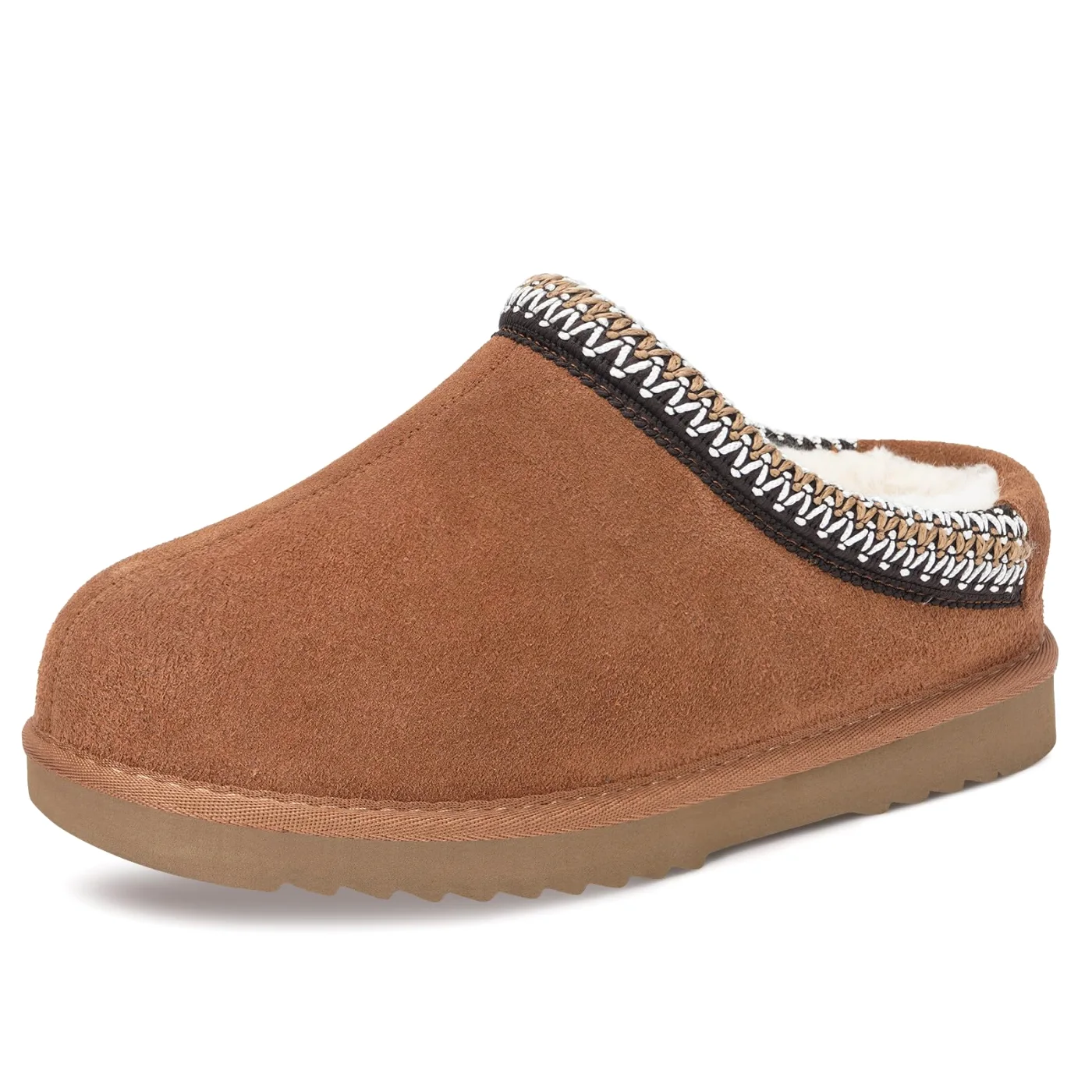
A child's slipper size is a moving target. The number on last winter's pair tells you little about this winter, and a pull-on slipper that fits loosely comes off on the first run down the hall. Here is how the sizes run, how to measure at home, and how much room to leave.
How kids' sizes run
US kids' sizes come in two series. Little Kid sizes climb up to 13 and then start again at 1. Big Kid sizes pick up from there. So a Little Kid 1.5 is larger than a Little Kid 13, and a Big Kid 4 is larger than both.
The Intini Kids Fuzzy Clog Slipper runs from Little Kid 1.5 to Big Kid 7. A Big Kid size is not an adult size, even when the numbers look alike, so do not read a Big Kid 7 as a women's 7.
Measure at home, in the evening
Feet swell over the day, so measure after school or before bed. Put a sheet of paper on the floor against a wall. Have your child stand on it with their heel touching the wall and their weight on that foot, then mark the tip of the longest toe. Measure from the wall to the mark.
Do both feet. The American Orthopaedic Foot & Ankle Society suggests fitting the larger one, and one foot is often a little longer than the other.
How much room to leave at the toe
The American Podiatric Medical Association suggests 10 to 15 millimeters in front of the longest toe. AOFAS puts it at about half an inch, which is the same range, about 13 millimeters.
To check a slipper on the foot, have your child stand, then press the front of the slipper with your thumb to find the end of the longest toe. About a thumb's width of space between the toe and the end of the slipper is right. Toes pressed against the front mean the pair is too small.
Why a pull-on slipper needs a closer fit
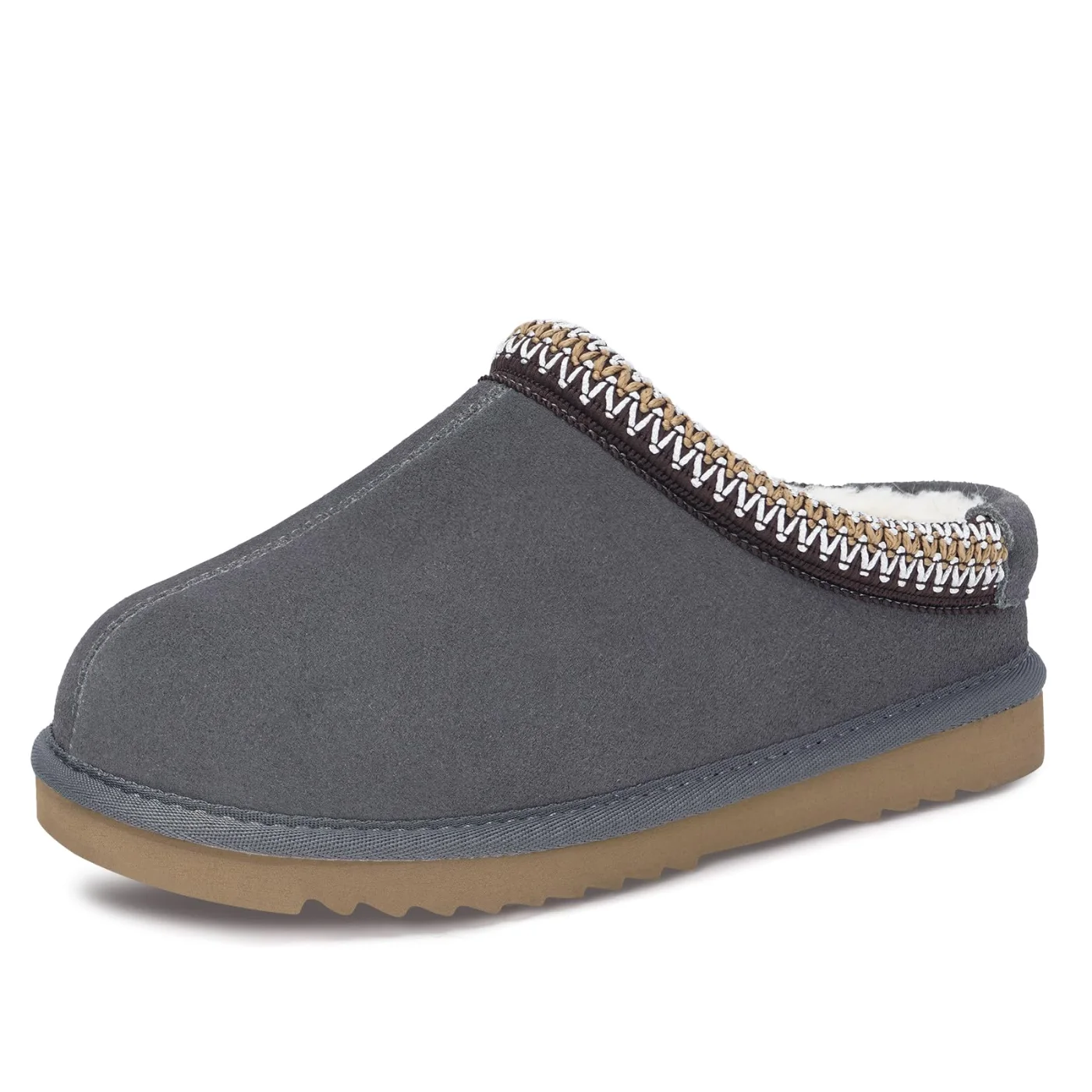
Our kids' clog slipper has no buckle and no strap. That is what lets a child put it on alone, and it also means nothing holds the heel in place except the fit. APMA prefers a secure fastening for children's shoes. In a slipper without one, the size has to do that job.
Watch your child walk and then run a few steps. If the heel lifts out of the slipper with every step, the pair is too big. When a child sits between two sizes, choose the one that stays on at the heel while still leaving that half inch at the toe. A slipper with lots of spare room stays on the floor, not on the foot.
How often to check the size
APMA suggests checking a child's size every four to six months. AOFAS notes that children may need new shoes every three to four months, and growth does not keep a schedule.
- Toes touch the front of the slipper when your child stands.
- Red marks across the toes or the top of the foot after wear.
- The slipper keeps coming off at the heel, which can mean it was bought too big or has stretched.
- Your child starts taking the slippers off to walk.
Arch support and floors at home
AOFAS writes that most children do not need a special arch support. The Intini kids' slipper has a faux fur lined insole on a grooved EVA sole, not a shaped arch.
The grooves in the sole hold a wood or tile floor better than socks do. Stairs still deserve care in any slipper without a back: hand on the rail, no running down.
A question about a pair in this piece? Write to corkbed@intini.net and everyone at Intini will answer.